Will AI replace Teachers? Understanding the Future of Education

August 26, 2026

11:18 AM
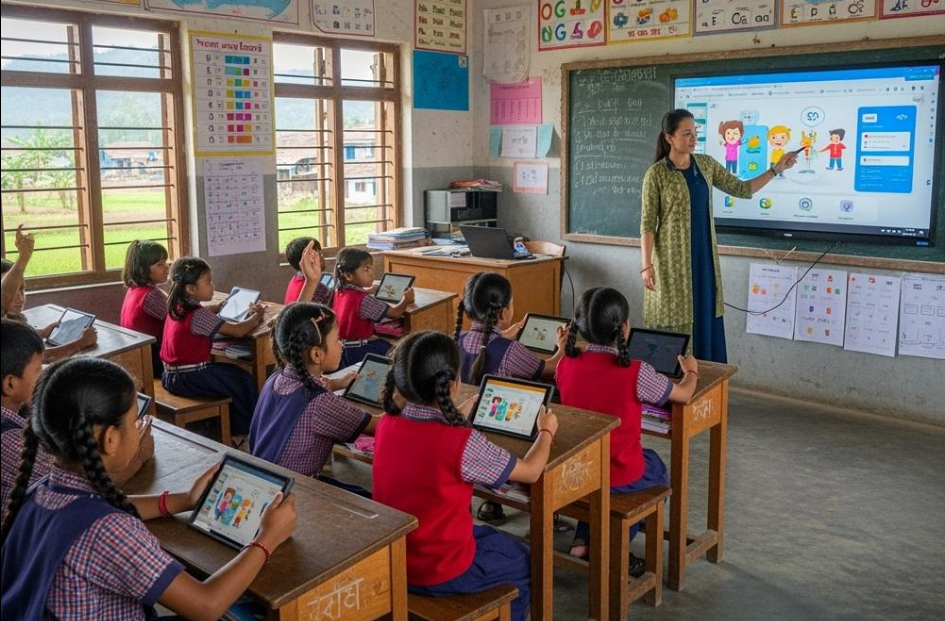
Imagine a classroom where an AI tool can explain a difficult maths problem in seconds, create practice questions based on a student’s level, or help a teacher identify where students are struggling.
Sounds futuristic? It is already becoming part of the conversation around AI in education.
But there is one important question: If artificial intelligence can teach, explain and personalise learning, will AI eventually replace teachers?
The answer is more interesting than a simple yes or no.
What Can AI Do in Education?
AI can process large amounts of information and perform certain educational tasks quickly. AI-powered learning platforms can analyse student responses, identify learning gaps and provide personalised exercises.
For example, imagine a student struggling with fractions. An AI-based learning tool could provide simpler explanations, additional examples, visual exercises and practice questions based on the student’s performance.
Teachers can also use AI to help prepare lesson plans, create quizzes, generate activity ideas and organise learning materials.
This means AI can become a powerful teaching assistant—but it does not necessarily become the teacher.
What Does a Teacher Do That AI Cannot?
Teaching is much more than delivering information.
A teacher notices when a child is unusually quiet. They understand when a student needs encouragement rather than another explanation. They recognise confidence, frustration, curiosity and hesitation.
A teacher can say:
“I know this is difficult, but let’s try it together.”
That human connection is difficult to reproduce with technology.
UNESCO has emphasised that teachers remain central to education because AI cannot replicate the human understanding, emotional connection and socialisation that teachers provide.
A teacher is not simply a source of answers. A teacher is a mentor, guide, motivator and role model.
AI + Teacher: A More Powerful Classroom
The future may not be about AI versus teachers.
It may be about AI with teachers.
Consider a science class. An AI tool could help generate an interactive simulation showing how a volcano erupts. But the teacher can turn that technology into meaningful learning by asking:
- Why does an eruption happen?
- What evidence supports your explanation?
- What would happen if the pressure changed?
- How could we demonstrate this safely?
The technology provides possibilities. The teacher provides direction, context and purpose.
The World Economic Forum similarly describes AI as a tool that can support teachers by handling certain tasks and allowing educators to spend more time on personalised interaction, mentoring and engaging learning experiences.
The Skills AI Makes Even More Important
As information becomes easier to access, knowing how to think becomes increasingly important.
Students need to learn how to:
- Question information
- Think critically
- Solve problems creatively
- Collaborate with others
- Understand emotions and perspectives
- Make responsible decisions
- Use technology ethically
AI can generate an answer, but students still need to ask:
“Is this answer correct?”
“Where did this information come from?”
“Does it make sense?”
Recent discussions around AI in classrooms have highlighted the importance of critical thinking because AI-generated information can sometimes contain inaccuracies, bias or lack cultural context.
So, will AI replace Teachers?
Probably not in the way many people imagine.
The more likely future is a classroom where teachers and technology work together.
AI can handle some repetitive tasks, provide personalised resources and make information more accessible. Teachers can focus on what makes education deeply human—inspiration, mentorship, creativity, empathy, discussion and meaningful relationships.
Conclusion
At Auden School, we believe technology should enhance learning—not replace the human connection that makes education meaningful. By combining strong academic foundations, experiential learning, technology and essential human skills, schools can help students become confident, curious and future-ready learners.
Because the future of education isn’t human or artificial intelligence. It is human intelligence, enhanced by technology.