Why Children Learn Better by Doing

September 18, 2026

6:20 AM
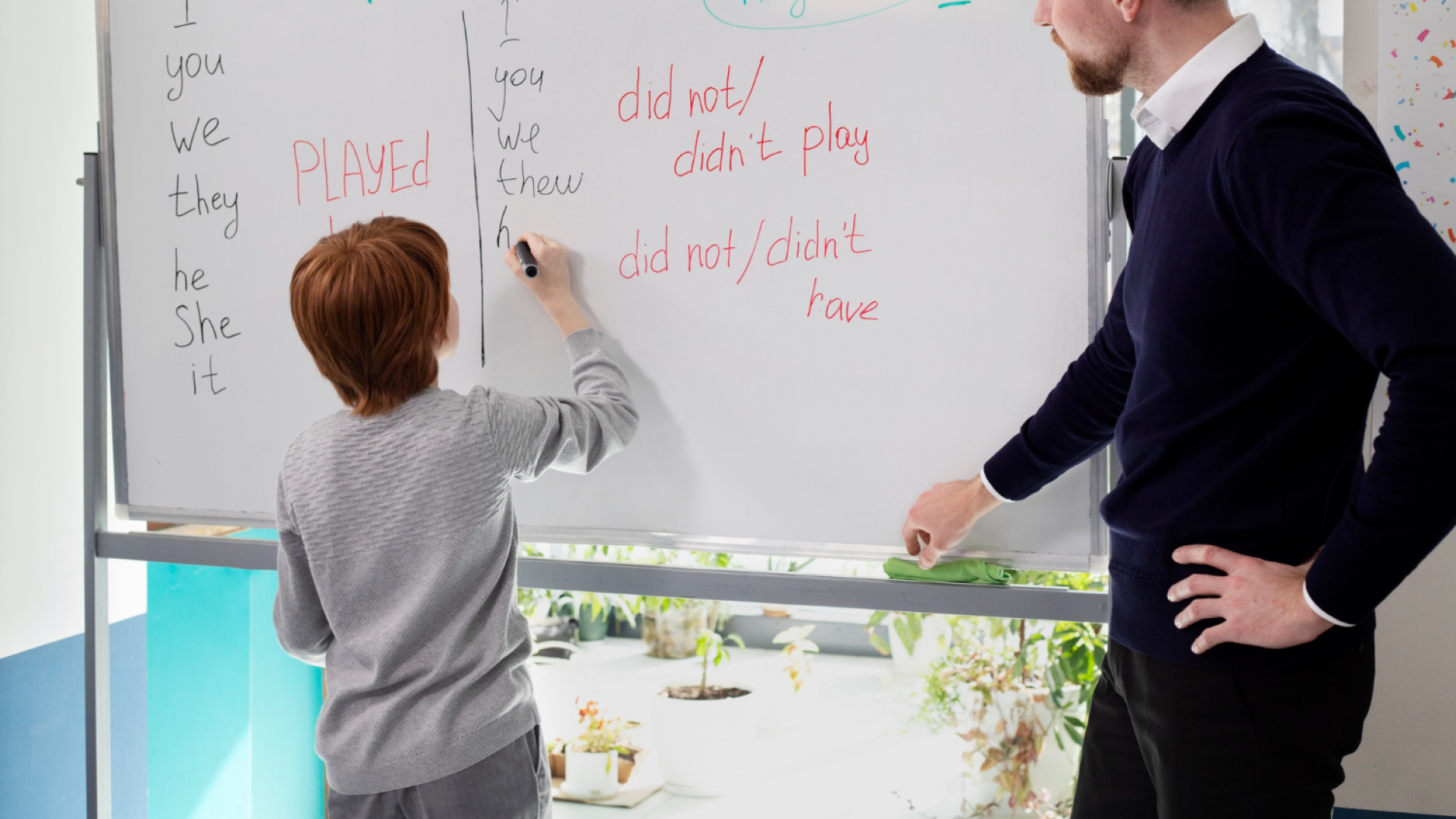
A child can read about how plants grow, memorise the parts of a flower and answer questions in a test. But what happens when that child actually plants a seed, observes its growth and records what changes each day?
The lesson becomes an experience.
This is the power of learning by doing—when children don’t simply receive information but explore, experiment, question, create and apply what they have learned.
From “I Know” to “I Can”
Education becomes more meaningful when knowledge moves beyond the textbook.
Imagine a mathematics lesson where students don’t just learn about measurements but measure objects around their classroom. A science lesson becomes more memorable when students conduct an experiment and discover what happens rather than simply reading the result. A language lesson can come alive through storytelling, role-play or a classroom presentation.
These activities encourage children to connect new information with something they have actually experienced.
A 2025 review of 44 research studies on experiential learning among children aged 4–14 found an overall positive impact on academic achievement, including benefits linked to science learning, memory and vocabulary development.
Why Hands-On Learning Matters
1. It Makes Abstract Ideas Concrete
Some concepts are difficult to understand when they exist only as words on a page.
When children use blocks to explore shapes, measure ingredients to understand fractions or observe shadows to explore light, an abstract idea becomes something they can see and manipulate.
Hands-on experiences allow children to interact with ideas rather than simply receive them, making learning more meaningful and engaging.
2. It Encourages Curiosity and Confidence
Doing so naturally leads to questions.
“Why did this happen?”
“What if I change this?”
“Can I build it differently?”
These questions turn children from passive listeners into active learners.
Learning through activities can also help children overcome the fear of speaking, participating or trying something new in front of others. When students work together, they encourage and motivate one another to step forward, share their ideas and participate with greater confidence.
A child who may hesitate to answer alone may feel encouraged when classmates support their effort.
Experimentation also gives children an opportunity to make mistakes, rethink their approach and try again—an important part of developing problem-solving skills and resilience.
3. It Helps Children Remember and Apply Knowledge
Learning isn’t only about remembering information for an examination. It is about being able to use knowledge in a new situation.
Research on children has found that actively retrieving information can strengthen later recall. This is why asking children to explain, demonstrate, solve, create or teach something can be more meaningful than simply asking them to read it again.
The Classroom as a Laboratory for Life
A classroom doesn’t have to be limited to desks, notebooks and blackboards.
It can become a laboratory where children investigate questions, a studio where they create, a stage where they communicate and a collaborative space where they learn from one another.
The Right Guidance Makes the Difference
While children need opportunities to explore independently, guidance from teachers and parents plays an equally important role.
Teachers can create meaningful activities, ask thought-provoking questions, provide feedback and help students turn mistakes into learning opportunities. Instead of simply giving children the answer, a teacher can guide them towards discovering it themselves.
Parents can extend this learning beyond the classroom by encouraging curiosity at home—whether it is involving children in simple household activities, discussing everyday observations, encouraging them to ask questions or allowing them to try solving problems independently.
Preparing Children for a World Beyond the Classroom
The future will not simply ask children, “What did you memorise?”
It will ask:
Can you solve the problem?
Can you explain your idea?
Can you work with others?
Can you test a solution?
Can you learn from what didn’t work?
That is why meaningful education gives children opportunities to learn, explore, create and apply.
At Auden School, learning can become more than remembering an answer—it can become discovering why the answer works and finding ways to use that knowledge in the world around them.