Computational Thinking: The Skill Every Child Needs for the Future

September 18, 2026

7:21 AM
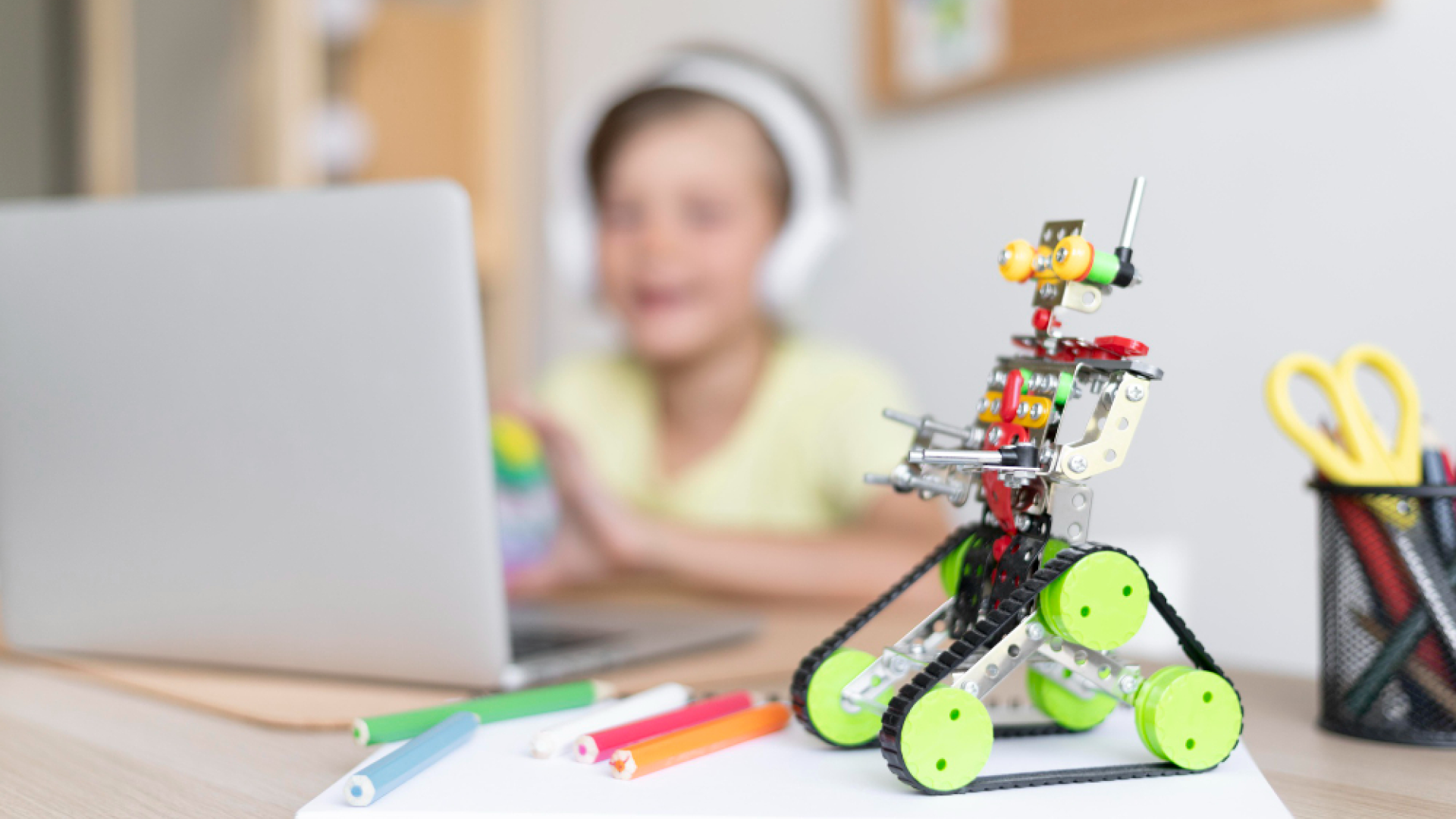
When a child figures out the quickest way to arrange their books, follows steps to build a model, spots a pattern in numbers, or works out why something is not working, something important is happening—they are thinking like a problem-solver.
This is where Computational Thinking comes in.
And no, computational thinking does not mean sitting in front of a computer all day. It is a way of approaching problems logically, breaking them into smaller parts, identifying patterns, and finding practical solutions.
What Exactly Is Computational Thinking?
Computational thinking is a structured way of solving problems. It commonly involves four important ideas:
- Decomposition – breaking a big problem into smaller, manageable parts.
- Pattern Recognition – looking for similarities, sequences, or patterns.
- Abstraction – focusing on the information that really matters.
- Algorithms – creating a clear, step-by-step process to reach a solution.
Imagine a student designing a simple automatic metal collector. Instead of looking at the whole challenge as one complicated task, the student can break it down: How will metal be detected? How will it be collected? What materials are needed? What happens if something goes wrong?
That is computational thinking in action.
Why Is It Becoming Important in Schools?
Technology is changing rapidly, but the ability to think, question, analyse and solve problems remains fundamental.
Recognising this shift, CBSE has introduced a course on Computational Thinking and Artificial Intelligence for Classes 3 to 8 from the 2026–27 academic session. The initiative is designed to build foundational thinking and problem-solving abilities at an early stage.
CBSE has also been developing teacher resources and organising initiatives around Computational Thinking and AI, showing that these skills are becoming an increasingly important part of school education.
Globally, computational thinking is also gaining attention. OECD research describes computational thinking and coding as increasingly important elements of modern education, while research reviewed by OECD highlights its potential to strengthen problem-solving and digital competencies.
It Isn’t Just About Coding
One of the biggest misconceptions is that computational thinking is the same as coding.
Coding can be one way to practise it, but computational thinking goes much further.
A child solving a Sudoku grid, organising information, planning the steps of an experiment, finding a pattern in a mathematics problem, designing a science model, or figuring out the best route to complete a task can all practise computational thinking.
This makes it a life skill—not just a technology skill.
How Can Children Develop Computational Thinking?
It can begin with surprisingly simple activities:
🧩 Logic games and Sudoku – encourage patterns, reasoning and deduction.
🔬 Science experiments – encourage children to observe, test, identify problems and modify their approach.
🧱 Building and designing – help children break a challenge into smaller steps.
📚 Sequencing activities – asking children to explain “what comes first, next and last” develops algorithmic thinking.
🎲 Strategy games – encourage planning, decision-making and anticipating outcomes.
💻 Coding and robotics – provide opportunities to turn logical ideas into instructions and test whether they work.
Parents can encourage these habits at home too. Instead of immediately giving children the answer, ask questions such as “What do you think will happen?”, “Can you try another way?” or “How can we break this problem into smaller steps?”
The Real Goal: Teaching Children How to Think
The future will undoubtedly bring new technologies, new careers and new challenges. Some of the tools children use tomorrow may not even exist today.
That is why education cannot be only about knowing the right answer. Children also need to know how to approach a new problem when there is no obvious answer.
Computational thinking helps nurture exactly that mindset—curiosity, logical reasoning, creativity, persistence and problem-solving.
At Auden School, learning becomes more meaningful when students have opportunities to question, experiment, create and find solutions. Whether it happens through classroom activities, science experiments, mathematics, technology or hands-on projects, every challenge can become an opportunity to think differently.